


|
Psychology Internship Training Program Overview - Scholarly Activity - New York City - Montefiore
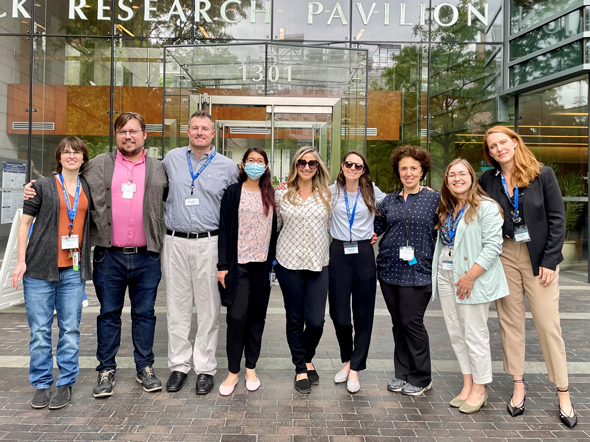
As an academic medical center, Montefiore’s mission is to heal, to teach, to discover, and to advance the health of the communities we serve. While our internship deliberately places the heaviest emphasis on clinical service (“to heal”), we deliberately balance this with training and education (“to teach”), and research (“to discover”). Some examples include our intense and thorough clinical supervision, full day of didactics (Thursdays), recurring case conferences, and a weekly. Department of Psychiatry Grand Rounds (from September through June) that features renowned presenters from across the nation. In addition, interns are required to complete a research project during the internship year and are also frequently invited by the faculty to participate in additional scholarly projects, such as invited papers and chapters and conference presentations.
Supervision
The Psychology Internship Training Program places a heavy emphasis on supervision. On average, interns in all four of our specializations receive between 5-7 hours of supervision per week, 3-4 of which are individual supervision hours and 2-3 of which are group or dyadic supervision hours. The Psychology Internship Training Program faculty are experts in a number of different theoretical approaches (e.g., Cognitive Behavioral Therapy, Dialectical Behavior Therapy, Psychodynamic Psychotherapy, Interpersonal Psychotherapy, LGBTQ mental health, etc.) and modalities (e.g., individual, couples, family systems, group). In addition, interns participate on weekly multidisciplinary treatment teams, take a turn presenting an ethical dilemma during our monthly Division of Psychology meeting, and attend a monthly meeting “On Becoming a Supervisor” run by our five postdoctoral fellows. Finally, depending on an intern’s rotation and supervisor, supervision may involve the audio and/or videotaping of sessions, review of your process notes, and being observed and/or engaging in co-therapy.
Didactics
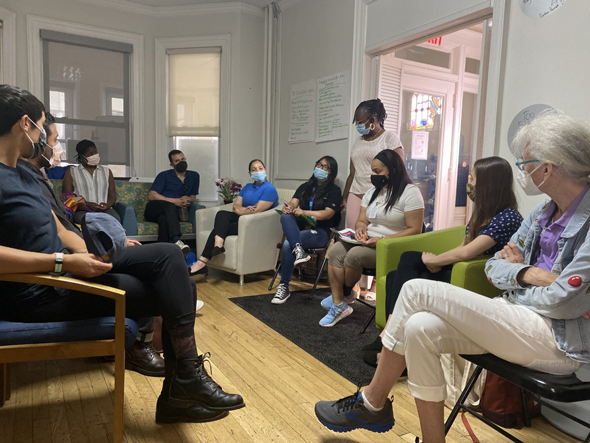
The department uses Thursday as its training and education day. As such, all interns attend lectures from 9:00am - 10:15am and from 1:00pm - 3:00pm, throughout the entire year. Some of these lectures are conjointly attended by psychiatry residents and fellows, as well as psychology externs. The curriculum, which is presented by members of the faculty as well as other select invitees, is organized around a number of modules that are directly connected to our goal and objectives, including several lectures on culture and diversity, as well as others on special topics of importance to new health service psychologists.
In most years, the curriculum will include: crisis management, psychopharmacology for psychologists, psychological testing, neuropsychological assessment, learning disabilities, as well as a variety of specific therapeutic approaches, including: 5 full days of Dialectical Behavior Therapy training, Cognitive Behavioral Therapy, Acceptance and Commitment Therapy, Psychodynamic Therapy, Trauma-Focused Therapy for Children, Motivational Interviewing, and Mindfulness Training. In addition, we provide lectures on the various therapy modalities, including Family Therapy, Couples Therapy, Marriage/Relationship Education, Group Therapy, and Sex Therapy. We also often provide lectures on how to treat specific disorders and populations, including: Disruptive Behavior Disorders, Substance Abuse, Geriatrics and End of Life Issues, Sleep Disorders, and Headache and Pain.
Finally, we feature a series of lectures meant to broaden our interns’ knowledge on the various career possibilities of psychologists in different settings, such as: Consultation/Liaison Psychology, Family and Social Medicine, an AIDS Center, Integrated Primary Care, Transplant Programs, and Forensic Psychology and typically finish the year with a series on various professional development issues, including: Psychology Licensure, Building a Private Practice, Ethical Issues, Becoming a Supervisor, Self-Care and Burnout, and Dealing Effectively with the Media.
Click Here to View the 2023-24 Curriculum
Grand Rounds and Case Conferences
Each Thursday from September through June between 10:30 and 12:00 interns are also required to attend the Department of Psychiatry Grand Rounds series. This series frequently has distinguished invited speakers from across the nation presenting on various timely topics in psychiatry and psychology. Past presenters have included: Linda Carter Sobell, Douglas Woods, Blair Simpson, Barbara Milrod, Lata McGinn, Moira Rynn, David Barlow, Alec Pollard, David Moscovitch, Jonathan Abramowitz, Robert Kohlenberg and Mavis Tsai, Kelly Posner, Fugen Neziroglu, Scott Lilienfeld, Susan Orsillo, Dianne Chambless, Katherine Shear, Rachel Yehuda, Joseph Garner, Adam Radomsky, Kristene Doyle, Douglas Mennin, Martin Franklin, Randy Frost, Nancy McWiliams, Terence Wilson, Martin Antony, Robert Leahy, Barbara Rothbaum, Steven Taylor, and Judith Beck. Most speakers agree to stay for a special, private lunch with the trainees immediately following Grand Rounds, and, on occasion, stay after lunch to teach a mini workshop for the interns in place of the afternoon didactics.
Click Here to View the 2023-24 Grand Rounds Schedule
In addition to the Department-wide Grand Rounds, interns often are able to attend weekly case conferences and/or multidisciplinary team meetings on each of their clinical service rotations, which allows for consultation with experts and specialists on current clinical cases. Finally, there is also a quarterly faculty case conference which the interns can attend, featuring a presentation of a complex and challenging case, which is then discussed from multiple clinical perspectives.
Required Research and Other Optional, Scholarly Projects
All interns are required to participate in research during the internship year. Many of the faculty at Montefiore (within the Department and outside of it) are actively involved in research and willing to supervise psychology interns in research.
Outside of the required research, the Psychology Internship Training Program at Montefiore Medical offers numerous additional, optional ways in which interns can get involved in scholarly projects. For example, interns typically are presented with numerous opportunities to collaborate with faculty on presentations at scientific conferences and/or invited presentations or on writing projects such as book chapters, book reviews, journal articles, and even co-authoring a book.
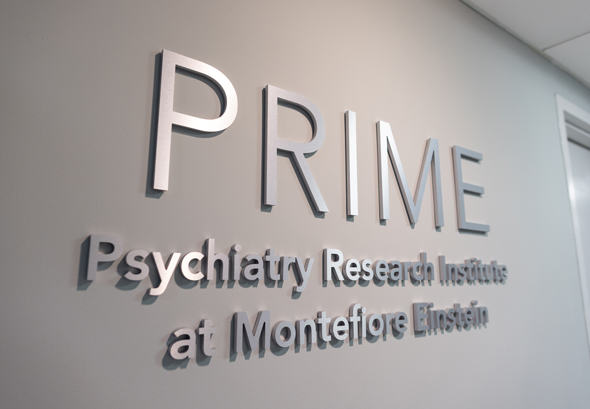
Finally, in May of 2022, the Department of Psychiatry and Behavioral Sciences held a pandemic-delayed ribbon cutting ceremony and inaugural PRIME Research Day at the PRIME (Psychiatry Research Institute at Montefiore Einstein) headquarters on the 4th floor of the Van Etten Building on the Einstein Campus. Interns each year are encouraged to submit a poster for presentation at what is now an annual event each May. In addition, the faculty at PRIME can serve as excellent mentors for interns seeking a path in research and/or academia after completing their internship year.
Click Here for more information about PRIME’s Center for Health Equity (CHE).
Click Here for a list of research mentors and their areas of research/interest.
- Services and Treatments
- Outpatient Mental Health Services
- Outpatient Substance Abuse Services
- Neuropsychology Assessment Service (NAS)
- Contact
-
Education
- Psychiatry Residency
- Psychology Postdoctoral Residency Program
-
Psychology Internship Training Program
- Psychology Internship Training Program: Overview
- Specializations
- Elective Rotations
- Competence and Confidence in Evidence-Based Treatments and More
- Scholarly Activity
- Stipend and Benefits
- Application and Intern Selection Process
- Internship Directors
- Internship Faculty
- Current Interns
- Program Graduates
- Frequently Asked Questions
- Internship Admissions, Support, and Initial Placement Data
- 2023-24 Psychology Internship Training Handbook
- Addiction Psychiatry Fellowship
- Autism & OCD Fellowship
- Child Adolescent Psychiatry Fellowship
- Consultation-Liaison Psychiatry Fellowship
- Forensic Psychiatry Fellowship
- Geriatric Psychiatry Fellowship
- Early Career Physician Scientist Fellowships
- Psychiatry Research Institute
- University Behavioral Associates
- Montefiore-Einstein Psychiatry Associates
- Comprehensive Brain Health Center
- Careers